
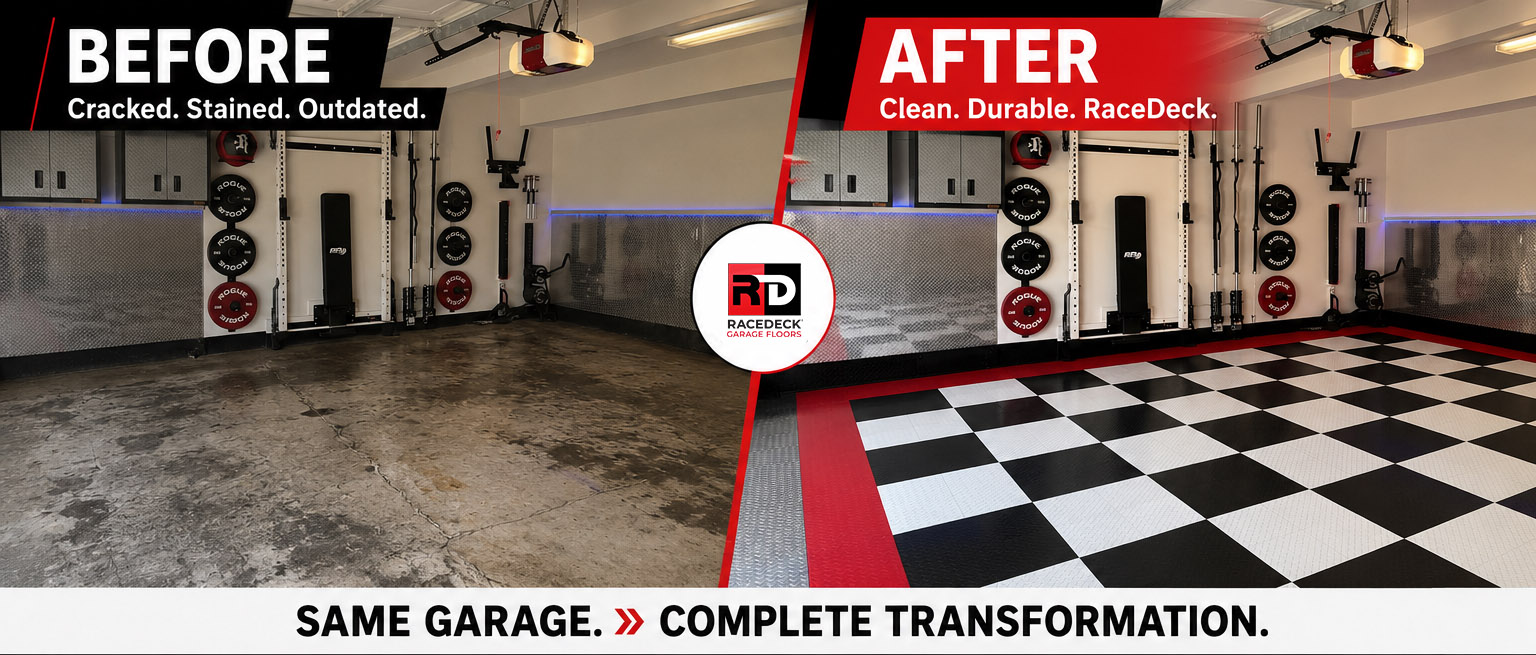
Garage floors are built to be tough, but even the strongest concrete can develop cracks over time. From freezing temperatures and soil movement to heavy vehicles and poor installation practices, several factors can cause a garage floor to crack. Understanding what’s causing the damage can help you prevent further deterioration and choose the best long-term solution for your garage.
Why Do Garage Floors Crack?
Concrete is incredibly strong, but it’s not indestructible. Over time, it expands, contracts, settles, and absorbs stress from daily use. When those forces become too great, cracks begin to form.
Some cracks are purely cosmetic, while others may indicate larger structural concerns. Here are the most common reasons garage floors crack.
1. Concrete Naturally Shrinks
One of the most common causes of garage floor cracks happens shortly after the concrete is poured.
As concrete cures, moisture evaporates and the slab shrinks slightly. This process is completely normal, but if the stress created by shrinking exceeds the concrete’s strength, small cracks can develop.
These are often referred to as hairline or shrinkage cracks and are usually more cosmetic than structural.
Properly placed control joints help manage this natural movement by directing cracks to specific locations instead of allowing them to form randomly across the floor.
2. Water and Freeze-Thaw Damage
Water is one of the biggest threats to any concrete garage floor.
When moisture seeps into small cracks or pores in the concrete and temperatures drop below freezing, the water expands as it turns to ice. This expansion puts pressure on the slab and can make existing cracks larger.
Over time, repeated freeze-thaw cycles can lead to:
- Wider cracks
- Surface flaking or spalling
- Chipping along crack edges
- Uneven floor surfaces
Keeping moisture off the floor and addressing cracks early can help reduce weather-related damage.
3. Soil Settlement Beneath the Slab
What happens underneath your garage floor is just as important as what happens on top of it.
Concrete relies on a stable foundation. If the soil beneath the slab shifts, settles, or erodes over time, sections of the floor can lose support. As the concrete bends under its own weight, cracks begin to form.
Common causes of settlement include:
- Poor soil compaction during construction
- Expansive clay soils
- Erosion from water runoff
- Natural ground movement
Cracks caused by settlement are often larger and more noticeable than simple shrinkage cracks.
4. Heavy Vehicles and Everyday Wear
Today’s vehicles are heavier than ever. Large trucks, SUVs, electric vehicles, trailers, and workshop equipment all place significant stress on garage floors.
Over years of use, that weight can contribute to cracking, especially if the slab was not designed for heavy loads.
Impact damage from dropped tools, jacks, engines, or machinery can also create cracks and weaken the surface.
5. Poor Installation Practices
Not all garage floors are created equal.
If the original concrete was mixed improperly, poured too thin, or not reinforced correctly, it may become more vulnerable to cracking later on.
Some common installation issues include:
- Too much water in the concrete mix
- Inadequate reinforcement
- Insufficient slab thickness
- Improper curing practices
- Poor finishing techniques
These mistakes may not be visible right away, but they often lead to premature cracking and deterioration.
Are Garage Floor Cracks a Serious Problem?
Not always.
Small hairline cracks are common and often don’t affect the performance of the floor. However, larger cracks may indicate a more significant issue.
You may want to consult a professional if you notice:
- Cracks wider than 1/4 inch
- Uneven sections of concrete
- Cracks that continue growing
- Water entering through the slab
- Multiple cracks spreading across the floor
Addressing problems early can help prevent more expensive repairs down the road.
How to Help Prevent Garage Floor Cracks
While no concrete floor lasts forever, proper maintenance can extend its lifespan.
Some simple ways to protect your garage floor include:
- Keeping water away from the slab
- Improving drainage around the garage
- Repairing cracks before they worsen
- Cleaning away road salt and winter debris
- Avoiding unnecessary impact damage
- Monitoring cracks for signs of movement
These steps can help slow deterioration and keep your floor looking its best.
Looking Beyond Cracked Concrete
Even with proper care, most concrete garage floors eventually show signs of age. Cracks, stains, and surface wear are common challenges for homeowners.
That’s one reason many homeowners choose to cover their concrete with modular garage flooring.
Why RaceDeck Is a Smart Upgrade
RaceDeck® garage flooring creates a durable, attractive surface over existing concrete while helping hide minor imperfections and surface cracks.
Benefits include:
- Covers minor concrete flaws
- Resistant to stains, moisture, and chemicals
- Easy to clean and maintain
- Durable enough for vehicles and workshops
- Fast, DIY-friendly installation
- Professional showroom appearance
Instead of constantly worrying about every crack or stain in your concrete, RaceDeck gives your garage a finished look that’s built for everyday life.
Final Thoughts
Garage floors crack for a variety of reasons, including natural concrete shrinkage, freeze-thaw cycles, soil settlement, heavy loads, and poor installation practices. While some cracking is completely normal, larger or expanding cracks may require attention.
Understanding what causes garage floor cracks is the first step toward protecting your investment. And if you’re ready to upgrade the look and functionality of your garage, a flooring solution like RaceDeck can help transform worn concrete into a clean, durable, and professional-looking space.

